
Stolen Treasury Check: Complete ERC Refund Recovery Guide
Businesses across the United States are reporting a growing problem involving stolen Treasury checks connected to Employee Retention Credit (ERC) refunds. Many companies waiting months for their ERC payments discover that the refund was mailed but never received, fraudulently cashed, altered, or stolen from the mail system.
Treasury check theft has become a serious issue because ERC refund checks are often large amounts, making them attractive targets for criminals involved in mail theft, check washing, identity fraud, and counterfeit schemes.
If your ERC refund check was lost or stolen, acting quickly is critical. In this guide, you’ll learn:
- What a stolen Treasury check is
- How ERC refund fraud happens
- Signs your refund may have been stolen
- How to report a stolen Treasury check
- How to request a refund trace
- Recovery timelines and replacement options
- Ways businesses can protect future payments
This guide is designed specifically for businesses dealing with delayed or missing ERC refunds.
What Is a Stolen Treasury Check?
A Treasury check is a payment issued by the United States Department of the Treasury. ERC refunds are commonly sent as official Treasury checks through the mail.
A stolen Treasury check refers to a government-issued payment that has been:
- Lost during delivery
- Stolen from a mailbox
- Intercepted in transit
- Fraudulently deposited
- Cashed using forged endorsements
- Altered through check washing schemes
In many cases, businesses do not realize there is a problem until they contact the IRS and discover the refund was already issued weeks or months earlier.
Because ERC refunds can involve substantial amounts of money, criminals actively target these checks using organized fraud networks.
Why ERC Refund Checks Are Being Targeted
The Employee Retention Credit program created billions of dollars in refund payments for eligible businesses. As refund checks began moving through the mail system, fraud activity increased significantly.
Criminals target Treasury checks because:
- ERC refund amounts are often large
- Paper checks are vulnerable during mailing
- Businesses may not track refund status closely
- Fraudulent deposits can happen quickly
- Mail theft crimes have increased nationwide
Some fraud rings specifically target government-issued checks because they are viewed as more valuable and easier to manipulate through forged endorsements or fake business accounts.
Common Treasury Check Fraud Schemes
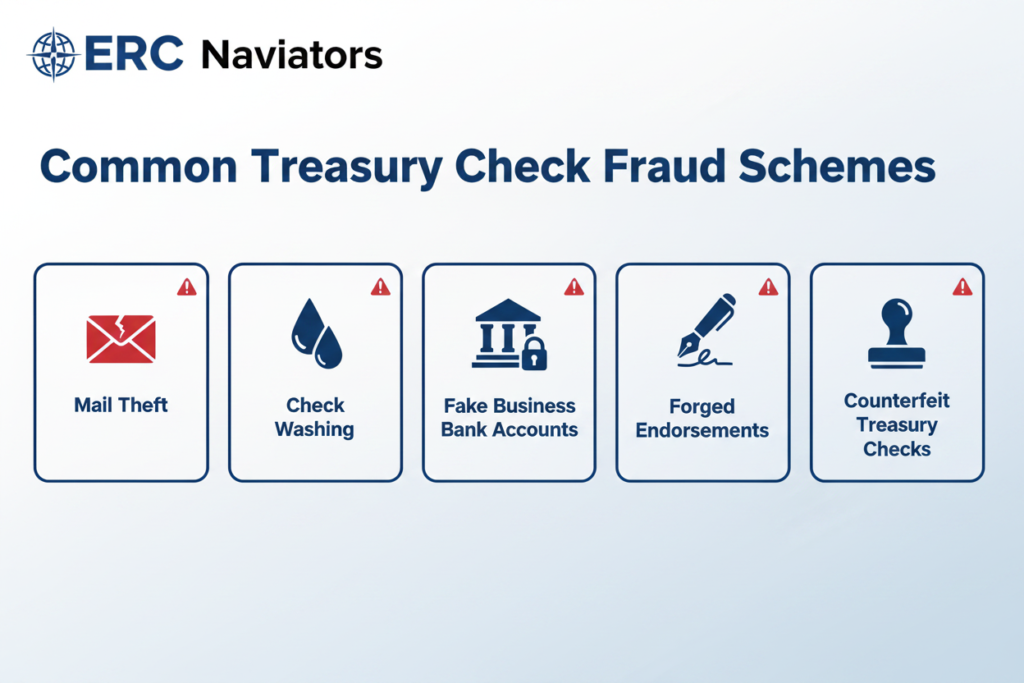
Understanding how Treasury check fraud works can help businesses identify problems early and avoid further financial damage.
Mail Theft
One of the most common schemes involves stealing checks directly from mailboxes or postal distribution systems.
Criminals may:
- Steal mail from business locations
- Target USPS collection boxes
- Intercept checks during delivery
- Use stolen keys or access devices
Mail theft often goes unnoticed until the intended recipient contacts the IRS about missing funds.
Check Washing
Check washing is a fraud technique where criminals chemically remove ink from a stolen check.
After removing the original information, fraudsters rewrite:
- The payee name
- Dollar amounts
- Deposit details
The altered check is then deposited into fraudulent accounts.
Fake Business Bank Accounts
Some scammers create fraudulent bank accounts using stolen EINs, fake business registrations, or identity theft information.
These accounts are used to:
- Deposit stolen Treasury checks
- Transfer funds rapidly
- Disappear before banks detect fraud
This type of fraud can create long investigation timelines for legitimate businesses waiting on replacement payments.
Forged Endorsements
A criminal may sign the back of a Treasury check using:
- Fake signatures
- Stolen business information
- Fraudulent authorization documents
The check is then cashed or deposited illegally.
Counterfeit Treasury Checks
Fraud networks sometimes create fake Treasury checks using templates designed to imitate real government payments.
These counterfeit checks are used in scams involving:
- Fake refunds
- Business impersonation
- Financial account fraud
Signs Your ERC Refund Check Was Stolen
Businesses should monitor ERC refund activity carefully. Common warning signs include:
- IRS records show the refund was issued, but you never received it
- Your bank reports the check was already cashed
- Refund delivery is delayed far beyond expected timelines
- The IRS says the payment cleared successfully
- You receive suspicious mail or fraud notices
- Unknown bank accounts appear connected to your business
- Treasury payment information does not match your records
If any of these issues occur, businesses should begin a refund trace immediately.
What To Do Immediately If Your Treasury Check Was Stolen
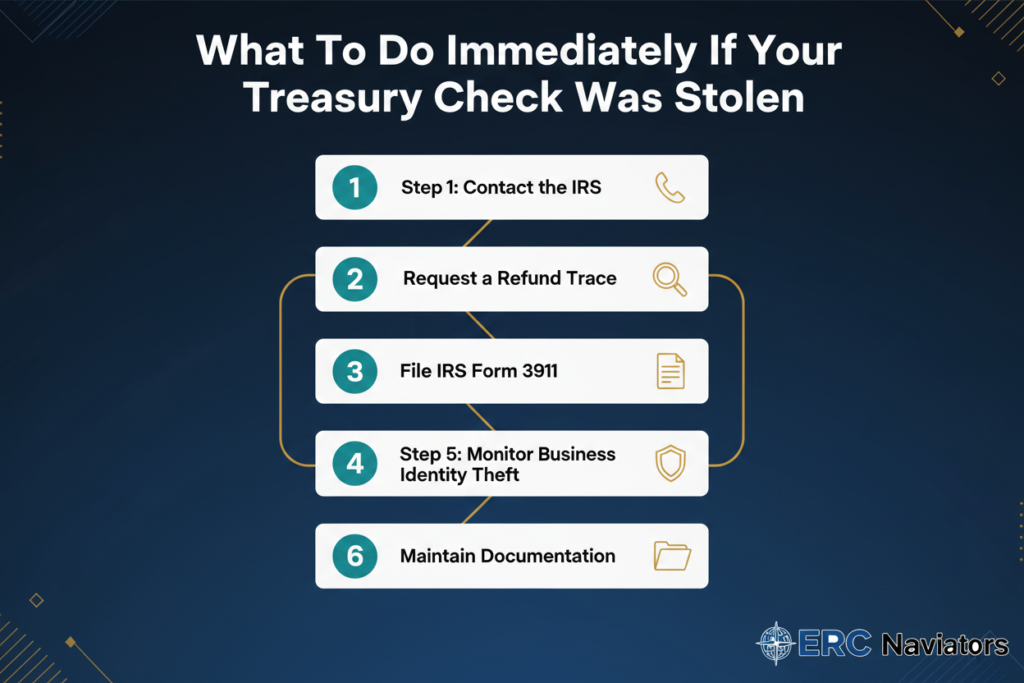
Quick action improves the chances of recovering stolen ERC refund funds.
Step 1: Contact the IRS
The first step is confirming whether the refund was issued.
Request:
- Refund payment status
- Treasury issuance date
- Refund trace procedures
The IRS may determine:
- Whether the check was mailed
- Whether it was cashed
- Whether fraud indicators exist
Step 2: Request a Refund Trace
Businesses can request a formal refund trace if the payment is missing.
A refund trace helps determine:
- Where the payment was sent
- Whether it was deposited
- Whether fraud occurred
The IRS investigation may involve the Bureau of the Fiscal Service.
Step 3: File IRS Form 3911
Form 3911 is commonly used to report missing or stolen refunds.
The form includes:
- Business identification information
- Refund details
- Explanation of the issue
Accurate information helps speed up the investigation process.
Step 4: Report Mail Theft
If mail theft is suspected, report the incident immediately.
Businesses may contact:
- USPS Inspection Service
- Local law enforcement
- Financial institutions connected to suspicious activity
Mail theft reports can support fraud investigations and identity theft claims.
Step 5: Monitor Business Identity Theft
Businesses impacted by stolen Treasury checks should monitor:
- EIN misuse
- Unauthorized bank accounts
- Fraudulent tax filings
- Suspicious IRS notices
Identity theft monitoring can help prevent additional financial damage.
Step 6: Maintain Documentation
Keep records of:
- IRS communication
- Refund trace requests
- Banking records
- Fraud reports
- Certified mail receipts
- Copies of submitted forms
Detailed documentation helps during investigations and replacement payment requests.
Can the IRS Replace a Stolen Treasury Check?
In many cases, yes.
If investigators confirm fraud or unauthorized cashing activity, the Treasury Department may issue a replacement payment after the original check is canceled.
However, replacement timelines vary depending on:
- Investigation complexity
- Whether the check was deposited
- Bank verification procedures
- Fraud confirmation status
- Identity verification requirements
Some cases may resolve within weeks, while others can take several months.
How Long Does a Treasury Check Investigation Take?
There is no universal timeline.
Treasury check investigations may involve:
- The IRS
- Financial institutions
- Treasury investigators
- Postal inspectors
- Fraud departments
Simple cases may move faster, while complex fraud investigations involving altered or cashed checks often require additional review.
Businesses should continue monitoring all IRS correspondence throughout the process.
How Businesses Can Protect Future ERC Refund Payments
While some theft incidents cannot be prevented, businesses can reduce risk significantly.
Use Secure Mailing Addresses
Avoid sending important financial mail to unsecured locations.
Monitor Refund Status Regularly
Track refund activity directly through official IRS communication channels.
Check Mail Frequently
Do not allow government mail to remain unattended.
Upgrade Mail Security
Businesses may consider:
- Locked mailboxes
- Secure mailrooms
- Monitored delivery systems
Watch for Identity Theft Activity
Monitor:
- Credit activity
- Banking alerts
- EIN usage
- Tax notices
Financial Impact of Stolen ERC Refund Checks
A stolen ERC refund can create major financial stress for businesses already dealing with:
- Payroll expenses
- Tax obligations
- Cash flow shortages
- Delayed government processing
Some businesses wait months or even years for ERC refunds. Discovering that a refund was stolen after issuance can create additional operational and legal complications.
Fast response and accurate documentation are critical.
How ERC Navigators Helps Businesses Facing ERC Refund Problems
At ERC Navigators, businesses receive guidance related to ERC refund challenges, delayed processing issues, and refund recovery concerns.
Support may include:
- ERC refund tracking assistance
- Refund status guidance
- IRS communication support
- Documentation preparation
- Understanding ERC filing issues
- Assistance navigating refund-related complications
Businesses dealing with delayed or missing refunds often benefit from organized support during the recovery process.
Frequently Asked Questions
What should I do if my ERC refund check never arrived?
Contact the IRS immediately and request a refund trace. If necessary, file Form 3911 and report suspected theft.
Can someone cash a stolen Treasury check?
Yes. Criminals may use forged endorsements, fake identities, or fraudulent bank accounts to cash stolen checks.
Will the Treasury Department issue a replacement check?
If fraud is confirmed and the original payment is canceled, a replacement payment may be issued.
How do I know if my Treasury check was cashed?
The IRS or Treasury investigation may determine whether the payment was deposited or negotiated.
Can direct deposit reduce Treasury check theft?
Yes. Electronic payment methods reduce the risks associated with mailed paper checks.
Final Thoughts
Treasury check theft and ERC refund fraud are growing concerns affecting businesses across the country. Missing refund checks, mail theft, forged endorsements, and identity fraud can create serious financial disruptions for companies waiting on ERC funds.
The most important step is acting quickly.
Businesses that report problems early, maintain accurate documentation, and follow proper refund trace procedures often improve their chances of resolving the issue successfully.
If your ERC refund check was stolen, delayed, altered, or fraudulently cashed, understanding the recovery process can help protect your business and reduce additional complications.